
If you’re like most people, you’ve probably searched the internet for dental probiotics with K12 in the UK, and quickly realised the options are very limited.
That’s all about to change, because we’ve created an innovative, dental probiotic supplement right here in the UK containing K12, as well as six other powerful probiotic strains.
We will also talk about the different types of oral probiotics and how to choose the best dental probiotic supplement from the vast amount out there (not all of them are good!)
Is Dental Probiotics with BLIS K12 available in the UK?
Yes – it is now. We realised there wasn’t a powerful, dental probiotic supplement containing BLIS K12 in the UK. Too many have very low CFU amount and were missing key, oral probiotic strains.

The dental probiotic supplements with K12 included which we found had all been created in the US or China. Due to production standards being difficult to monitor on supplements created abroad, we thought it was best to manufacture in the UK.
Why are there hardly any dental probiotics with K12 in the UK? The US are simply ahead of us but we expect this to change in the next few years.
Not only does Dental Probiotics from Mouthgenics include Streptococcus Salivarius BLIS K12, but also includes 6 other beneficial oral probiotic strains combined with Vitamin D and Zinc, creating a powerful dental probiotic for oral health.
Dental Probiotics K12 UK: Holland and Barrett
Are dental probiotics with K12 available in Holland and Barrett? If you have been searching for K12 at Holland and Barrett, you’re not alone! This is exactly what we did too.
Dental probiotics with K12 are not available in UK stores like Holland and Barrett or other retailers such as Boots or Superdrug. This is why we created our own, and made it better than other similar supplements currently out there.
What is BLIS K12?
BLIS K12 is a product patented by Professor John Tagg, who founded Blis Technologies Ltd in August 2000 in Dunedin, New Zealand. He discovered that in order for bad bacteria which had been multiplied in our oral cavities to be controlled, the good bacteria needed to counter competition for their space.

BLIS K12 is an advanced oral probiotic strain of Streptococcus Salivarius BLIS K12. This bacterium was discovered by scientists to be already present in the mouths of healthy people, but it is often in low numbers in those with gum disease or bad breath.
Although everyone has Streptococcus salivarius bacteria living in their oral cavities and throat, it was actually not very common of people to have the specific K12 strain within.
Unlike mouthwash for example which kills bad bacteria as well as the good too in the process, Streptococcus Salivarius K12 helped to restore the balance through colonisation.
How Does BLIS K12 Work?

The bacterium produces an enzyme called lysozyme, which helps to break down the cell walls of harmful bacteria. This action helps to reduce the amount of plaque-forming bacteria in the mouth and can also help to prevent gum disease.
Here is what BLIS Technologies say: BLIS K12™ is a specific strain of bacteria called Streptococcus salivarius K12™ which can be found naturally in the mouth and throat of some healthy adults and children. Our scientists discovered that while everyone has Streptococcus salivarius bacteria, it is not as common to have the specific beneficial BLIS K12™ strain.
What Does The Science and Research Studies Show for BLIS K12?

Numerous studies show the impact BLIS K12 in treating bad breath/halitosis and other dental health issues.
One study published in the National Library of Medicine found 23 subjects suffering with halitosis were put through 3 days of testing with the Streptococcus salivarius K12 strain. After a week of testing, the subjects’ volatile sulphur compound – the unpleasant bad breath smell – showed a reduction of 85%.
Another study found that taking a probiotic with BLIS K12 for eight weeks resulted in a significant reduction in plaque formation and gum bleeding (gum disease).
BLIS K12 enhances mucosal immunity against viral infections and can increase protective secretory immunoglobulin A (sIgA) during immune challenges.
Regular use has also been associated with reduced recurrence of common ear, nose, and throat infections, including fewer viral pharyngo-tonsillitis episodes in children.
Research has also reported a 64% reduction in bacterial upper respiratory infections.
This study found Streptococcus salivarius K12 to supress the growth of Solobacterium moorei, the bacterium known as a key contributor to bad breath (halitosis).
Streptococcus salivarius K12 is an anti-inflammatory increasing the tolerance of the oral immune system, which helps prevent gum disease.
Streptococcus salivarius K12 helps prevent inflammation in the mouth, preventing the condition and its related complications like periodontitis (gum pockets) to develop.
Can Other Dental Probiotics besides K12 Help with Poor Oral Health?

Yes – BLIS K12 is just one option among other probiotics for oral health. There are many different strains of probiotics, each with their own specific health benefits.
We have compiled a list of the best probiotics to help with dental/oral health with research studies, which you can skip to below. So what exactly are oral probiotics?
What Are Dental/Oral Probiotics?
Dental or Oral Probiotics are a type of good bacteria that live in the oral cavity, helping support beneficial bacteria and balance the oral microbiome. Like the probiotics which live in the gut which help with crucial activity like digestion, dental probiotics refer to the good bacteria which are fundamental for good oral health.
Dental probiotics are live microorganisms that, when administered in adequate amounts, confer huge health benefits on the host. Specific dental probiotic strains play a crucial role in supporting oral health and overall health, and are very effective in treating conditions of the mouth such as bad breath, gum disease and plaque formation.
Are Dental Probiotics Natural?

They can also be found naturally in foods. Here is a list of foods which contain dental probiotics, and can be used as natural remedies.
The best way to take probiotics however is via a supplement that contains multiple strains of live bacteria. This ensures that the probiotic will colonise the mouth and throat and deliver the desired health benefits.
How Do Dental Probiotics Work?
Dental Probiotics work by delivering good bacteria directly to the mouth, where they can help to keep the undesirable bacteria in check. This process restores the imbalance of the microbiome of the mouth, helping to prevent the bad bacteria causing dental problems such as bad breath and gum disease.
Unlike gut probiotics which are swallowed straight away to get to work in the gut, dental probiotics are chewed and moved around the mouth, allowing them to dissolve and populate. In this way, they colonise the mouth and compete against the bad bacteria which have taken over residence.
Once the bad bacteria begins to outnumber the good, they begin to release foul-smelling gases causing bad breath and other issues. Dental probiotics work to restore the balance in the mouth, helping massively to reduce bad breath, unhealthy gums and other diseases.
Do Oral Probiotics Really Work?
Yes – they really do work in treating all kinds of nasty diseases of the mouth and numerous studies have backed up the claims. They can get to the root cause of issues such as halitosis.

Here are some of the benefits dental and oral probiotics have on oral health:
-
- Prevent bad breath (halitosis).
-
- Reduced gum inflammation.
-
- Treats tooth decay and loss (periodontitis).
-
- Helps to cure gingivitis (gum disease).
-
- Prevents tonsil stones.
-
- Reduced plaque formation.
-
- Strengthened tooth enamel.
-
- Restores PH level in mouth.
How to Choose the Best Dental Probiotic Supplement for Oral Hygiene
With so many probiotic supplements to choose from, how do you know which is best to choose?
[
The most vital thing you need to understand when it comes to choosing dental probiotic supplements is to check these 6 factors:
1. The dental probiotics contain S.Salivarius K12
As mentioned above, Streptococcus salivarius K12 is one of the most effective probiotics in treating bad breath.
2. Targeted probiotic strains designed for dental health
Look for products that contain live and active cultures of dental probiotic strains such as Streptococcus salivarius K12 and lactobacillus reuteri. Avoid supplements containing a whole load of probiotic strains, and focus instead on targeted maintaining microbial balance in the mouth.
More isn’t always better; you’re way better off having the right, targeted probiotic strains created for oral hygiene than a product which aims to do everything.
If you are suffering with bad breath, plaque formation, gum disease, periodontitis and other dental related issues, you need a specific dental probiotic supplement.
3. Correct amount of CFU in the supplement
Another important factor to look for when choosing a probiotic supplement is the number of live bacteria it contains, measured in CFU (colony forming units).There are many probiotic supplements containing way too many, or too few CFU. Choose a supplement with 6-9 CFU to deliver the best results. Again, more isn’t always better:
According to the National Institute of Health, “A product with 7 quality probiotic strains will deliver better results than a product with 12 strains that have fewer benefits”.
4. They come in the form of a Chewable tablet or lozenges
Chewable tablets and lozenges are the best delivery methods for dental probiotics as they allow the bacteria to come into direct contact with the teeth and gums.
5. The probiotic supplement contains a prebiotic
A prebiotic is a type of dietary fibre which acts as a food source for the probiotic bacteria. Prebiotics can’t be digested by the human body, but is fermented by probiotic bacteria.
This fermentation process helps probiotics absorb faster, making them more even more effective. When choosing a dental probiotic supplement, make sure it contains inulin or FOS (fructo-oligosaccharides), both of which are prebiotics.
6. They contain Zinc and Vitamins
When choosing a dental probiotic supplement, make sure it contains these vital nutrients too.
Vitamin D and Zinc are essential for oral health. Zinc helps to reduce bad breath by fighting the bacterium which cause it.
Vitamin D is essential for gum health, and a deficiency has been linked to periodontitis.
The 7 Best Probiotic Strains for Bad Breath and Gum Disease with Research Studies

Now that you know what to look for when choosing dental probiotic supplements, here are the best oral probiotic strains if you’re suffering from bad breath, plaque formation, gum disease, periodontitis or other dental related issues.
We have compiled a list of the best probiotics to help with dental/oral health with scientific research studies.
To do this, we investigated the clinical trials and research on dental probiotics from numerous sources and compiled them into one blog, all in one place.
1. Streptococcus Salivarius BLIS K12
We’ve already discussed Streptococcus Salivarius BLIS K12 above and the science behind it. You can view the benefits here.
2. Lactobacillus Reuteri
Lactobacillus Reuteri is a probiotic strain that’s found in the human digestive system, and the mouth.
L.reuteri has been shown to be effective in reducing gum inflammation, prevent bad breath, plaque formation and gingivitis.
There are many studies backing up the beneficial claims L.reuteri has on its host.
Lactobacillus Reuteri is good for:
-
- Bad breath (halitosis)
-
- Plaque reduction
-
- Gum disease
-
- Bleeding gums
-
- Gum inflammation
A study performed on 25 healthy adults with bad smelling morning breath were given gum containing L.reuteri over a one month period. By the end of the study, all participants psotive results and reductions in bad breath.
A further study over a 90 day period showed significant reduction in halitosis and periodontal parameters following an experiment with 3 probiotic strains: L.Reuteri, Lactobacillus Salivarius and Lactobacillus Acidophilus.
A study published in the National Library of Medicine found after 2 weeks of supplementing with L.Reuteri, the gingival index fell significantly amongst the 59 patients with gingivitis and plaque formation.
Another study published in the Journal of Clinical Periodontology found that after eight weeks of supplementation with L.Reuteri saw a significant reduction in gum bleeding and plaque.
A further study published in the same journal found that L.Reuteri was more effective than chlorhexidine (a common mouthwash ingredient) in reducing gum inflammation.
3. Lactobacillus Salivarius
Lactobacillus salivarius is a type of probiotic that can be found in the human mouth, essential for keeping good dental hygiene. This bacterium has been shown to reduce the levels of Streptococcus mutans, a type of bacteria that is known to cause cavities.
Lactobacillus salivarius is good for:
-
- Bad breath
-
- Supports tooth and gum health.
-
- Gum disease.
-
- Plaque reduction.
-
- Tooth loss (periodontitis).
-
- Tooth decay.
As stated above, This study over a 90 day period showed significant reduction in halitosis and periodontal parameters following an experiment with 3 probiotic strains: L.Reuteri, L.Salivarius and Lactobacillus Acidophilus.
A study by B D Chaves , M M Brashears and K K Nightingale found L.salivarius significantly reduced the VSC (volatile sulphur compound) in patients suffering with bad breath (halitosis).
Another study published in Science Direct saw 20 participants with pathologic halitosis tested for 2 weeks with L. salivarius. They found a reduction in gum bleeding upon probing, reduced gum pocket depths and decreasing the pathogens responsible for bad breath.
This study on mice shows a positive protection effect on Listeria monocytogenes (the bacteria notorious for causing gum disease).
4. Lactobacillus Acidophilus
Lactobacillus acidophilus is one of the most popular probiotics. This bacterium ferments food and turns it into lactic acid. This helps fight against the harmful bacteria in the mouth, encouraging the good to grow in place.
Lactobacillus acidophilus is good for:
-
- Bad breath.
-
- Overall dental health.
-
- Gum disease.
-
- Plaque formation.
-
- Prevention of cavities.
This 3 month study revealed significant reduction in halitosis following oral supplementation of strains including L. acidophilus.
This study on 12 children (15 year olds) looked at the effect dental probiotics, including L.acidophilus, had on gingival status and plaque inhibition. They found a significant reduction in gingival status and plaque inhibition after the second week of probiotic ingestion.
5. Lactobacillus Brevis
Lactobacillus brevis (L. brevis) is a type of probiotic, a good bacteria, that may help protect your teeth.
In this study, scientists wanted to see if L. brevis could stop damage to tooth enamel (the hard outer layer of teeth) caused by a harmful substance that mimics tooth decay.
To test this, they took 12 healthy teeth and divided them into different groups.
Some were treated with L. brevis, others with a harmful agent (similar to what causes tooth decay), and some with both.
After the analysis, here’s what they found:
- When only L. brevis was applied to the teeth, it didn’t change or damage the enamel. The tooth enamel stayed the same, showing L. brevis by itself isn’t harmful.
- The harmful agent damaged the enamel.
This is what usually happens in your mouth when your teeth are exposed to things like acids from food or bacteria, which can weaken the enamel and cause decay.
- However, when the harmful substance was used combined with L.Brevis, it greatly reduced the damage, helping restore calcium and phosphorus levels in the enamel, and helped protect the enamel.
The same study also found that L. brevis could help protect teeth by making them more resistant to the loss of minerals from enamel ( a process called demineralisation).
Demineralisation can prevent early tooth decay or cavities.
Researchers say more studies are needed to fully understand how L. brevis works to protect and strengthen teeth, but are very encouraged by the results seen so far.
Lactobacillus Brevis is good for:
-
- Tooth decay.
-
- Gum disease.
-
- Overall immune system.
The study has also shed light on the molecular basis of periodontitis and how it can be treated more effectively with a new, simpler approach.
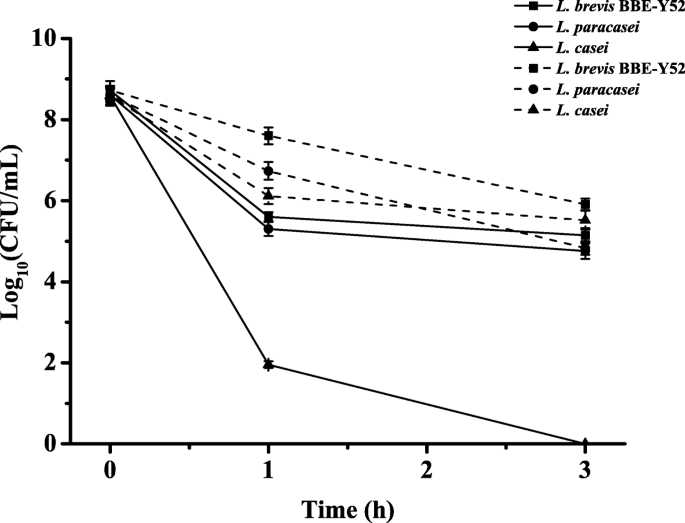
Another interesting study found L. Brevis to have a stronger resistance to acid stress than other dental probiotics, such as Lactobacillus Casei and Lactobacillus Paracasei.
This is beneficial as it’s so vital for probiotics to survive in harsh environments and conditions, like our mouths.
A 2007 study showed that taking a supplement with Lactobacillus brevis helped treat gum disease and gum inflammation.
6. Lactobacillus Paracasei
Lactobacillus Paracasei is a type of lactic acid bacteria that is commonly found in the mouth. This bacterium has been shown to have some good health benefits, including reducing the risk of cavities and gum disease.
Lactobacillus Paracasei is good for:
-
- Cavities.
-
- Candida (Oral thrush)
-
- Gum disease.
-
- Gum inflation.
-
- Tooth decay
This study on 122 children over a period of 12 months found L. Paracasei had a significant reduction of MS/SM (mutans streptococci – cavity causing bacterium notorious for tooth decay) and plaque.
Similarly, this study on rats also had the same results as above. L. Paracasei was found to have reduction in oral levels of Streptococcus mutans.
Furthermore, Mount Sinai Hospital, (part of Sinai Health), is an academic health science centre and published these findings in their study on L. Paracasei.
Having isolated 3,790 strains of lactic acid bacteria, L. paracasei was one of the oral probiotics with a high capacity to antagonise Streptococcus mutans, as well as Porphyromonas gingivalis (a negative bacterium and key periodontal pathogen). P. gingivalis is toxic and causes periodontitis.
This study published in the Journal of Probiotics & Health also found L. paracasei to have a significant reduction in salivary Streptococcus mutans.
7. Streptococcus Thermophilus
Streptococcus Thermophilus is a Gram-positive bacterium that is part of the normal human microbiota. S. thermophilus is found in the mouth and upper respiratory tract, as well as in the gastrointestinal tract.
S. thermophilus has been shown to have several beneficial effects on oral health, including reducing the risk of dental caries and periodontal disease.
The bacterium produces lactic acid, which helps to keep the mouth acidic and prevents the growth of other cavity causing organisms.
S. thermophilus also produces compounds that prevent the attachment of Streptococcus mutans, the primary bacterium responsible for dental plaque.
In addition to its role in oral health, S. thermophilus has also been shown to have a positive effect on the immune system. The bacterium produces compounds that stimulate the production of antibodies and help to fight off infections. S. thermophilus has also been shown to reduce the severity of allergic reactions.
Streptococcus Thermophilus is good for:
-
- Bad breath.
-
- Dental cavities.
-
- Dental plaque.
-
- Gum disease (gingivitis).
-
- Overall infections and allergies.
This study looked at the effects yoghurt containing S.thermophilus had on bad breath. They found mouth odour causing compounds, predominantly hydrogen sulphide, decreased significantly in 80% of the participants.
In addition to this, the researchers also found that plaque and gingivitis levels had dropped too considerably.
This study found S.thermophilus prevented the growth of P.gingivalis (bacterium and key pathogen for tooth decay) and reduction of VSC (volatile sulphur compounds); these are major contributors of bad breath.
Dental Probiotics with BLIS K12 from Mouthgenics
When we set out to create a dental probiotic supplement, we looked at what was currently out there and made it even better.
Dental Probiotics from Mouthgenics is an ideal choice for those looking for a high quality probiotic supplement. Our unique formula contains the K12 strain and the other strains listed above that have been shown to be beneficial for oral health. We’re the first of our kind to manufacture in the UK.
Summary – We’d Like To Hear From You!
It’s no wonder why dental probiotics are quickly gaining popularity to support a balanced oral microbiome for fresh breath and fewer dental issues, while helping with microbial balance in the mouth. They can help significantly with gum disease and tooth decay, promoting oral health by supporting beneficial microbes.
Have you tried dental / oral probiotics?
If so, how did you find them?
Share your comments and results below!


4 thoughts on “UK Dental Probiotics with BLIS K12: Powerful Against Bad Breath”
Very excited to try your product! Not long to go now! 🙂
I am very interested in trying this product.
Hi Elva, thanks for your comment. I can see you’ve submitted your interest; we’re working hard on the launch and we hope to have a launch date very soon. We’ll send an email when we have a date so keep your eyes peeled!
If you have any questions in the meantime, please don’t hesitate to get in touch 🙂
me gustaria recibir una muestra de su producto